Your phone system used to just route calls. Now it can answer them, qualify leads, book appointments, and send the follow-up email before you finish your coffee. The question for most businesses in 2026 isn’t whether to upgrade the phone setup. It’s whether to stay with cloud VoIP, move to AI communication, or run both side by side.
This guide breaks down the actual differences between business VoIP systems and AI communication tools, where each one wins, what each one costs, and how Florida businesses are mixing both to cut staffing costs by 70 to 85 percent without losing the human touch customers expect.
VoIP vs AI Communication
VoIP (Voice over Internet Protocol) is a cloud phone system that replaces traditional landlines. It carries voice calls over the internet and adds features like video, messaging, and call recording. AI communication tools go a step further. They use natural language understanding to actually handle conversations, answer questions, qualify leads, and complete tasks like scheduling appointments without a human on the line.
VoIP modernizes your phone lines. AI communication modernizes the conversations themselves.
Most businesses don’t have to choose one. The smart move in 2026 is layering AI on top of a strong VoIP foundation, which is exactly why next-gen business communications platforms like OmniCaaS bundle both into a single setup.
What Is VoIP?
VoIP turns voice into data and sends it over the internet instead of copper phone lines. That sounds technical, but the practical version is simple: you get clearer calls, lower bills, and features that old PBX hardware never offered.
A modern business VoIP system gives you:
- A single business number that rings anywhere (desk, mobile, laptop)
- HD voice quality with less dropped audio
- Voicemail-to-email and voicemail transcription
- Video conferencing and screen sharing built in
- SMS and team chat in the same app
- Call recording, analytics, and basic reporting
- Direct integrations with Microsoft Teams, Outlook, and most CRMs
VoIP is the upgrade most businesses already made. If you’re paying $15 to $35 per user per month for a cloud phone system from RingCentral, Zoom Phone, Vonage, Dialpad, or a regional provider, you’re using VoIP. It works. It scales. It’s the foundation everything else sits on.
What VoIP doesn’t do: it doesn’t pick up the phone for you. The call still has to be answered by a person, sent to voicemail, or routed through a touch-tone menu that customers hate.
What Is AI Communication?
AI communication tools handle the conversation itself. Instead of routing a customer to a human, an AI voice agent answers, listens, understands what the caller needs, and responds in natural language. Modern systems can:
- Greet callers by name when paired with your CRM
- Answer common questions pulled from your knowledge base
- Qualify leads by asking the right discovery questions
- Schedule, reschedule, and cancel appointments on your calendar
- Take payment information securely
- Switch between English, Spanish, and 40 plus other languages mid-call
- Hand off smoothly to a human agent when the call needs a person
The technology shift is bigger than it sounds. Old IVR systems followed a script (“Press 1 for sales, press 2 for support”). AI agents have actual conversations. A patient calling a clinic at 9 PM can book a Friday appointment, confirm insurance, and get directions, all without anyone on staff being awake.
That’s why AI communication tools are showing up everywhere from medical front desks to law firm intake lines to hotel reservations. The cost math is hard to argue with: a full-time receptionist in Florida runs $42,000 to $55,000 a year fully loaded. An AI agent that covers the same role 24/7 starts around $750 a month.
Key Differences Between VoIP and AI Systems
The fastest way to see the gap is to put them side by side.
| Capability | Business VoIP | AI Communication |
|---|---|---|
| Routes calls | Yes | Yes |
| HD voice and video | Yes | Often layered on VoIP |
| Requires a human to answer | Yes | No |
| Understands natural language | No | Yes |
| Books appointments automatically | No | Yes |
| Qualifies leads | No | Yes |
| Operates 24/7 without staffing | No | Yes |
| Multi-language support without staffing | No | Yes (40+ languages) |
| Typical cost | $15 to $35 per user/month | From $750/month per agent role |
| Best for | Internal team communications | Inbound customer interactions |
VoIP is infrastructure. AI is automation that runs on top of it. The two work together, but they solve different problems. If your team needs to talk to each other and the occasional client, VoIP is enough. If you’re losing leads after hours or burning staff on repetitive calls, AI is what you actually need.
Traditional Calling vs Smart Automation
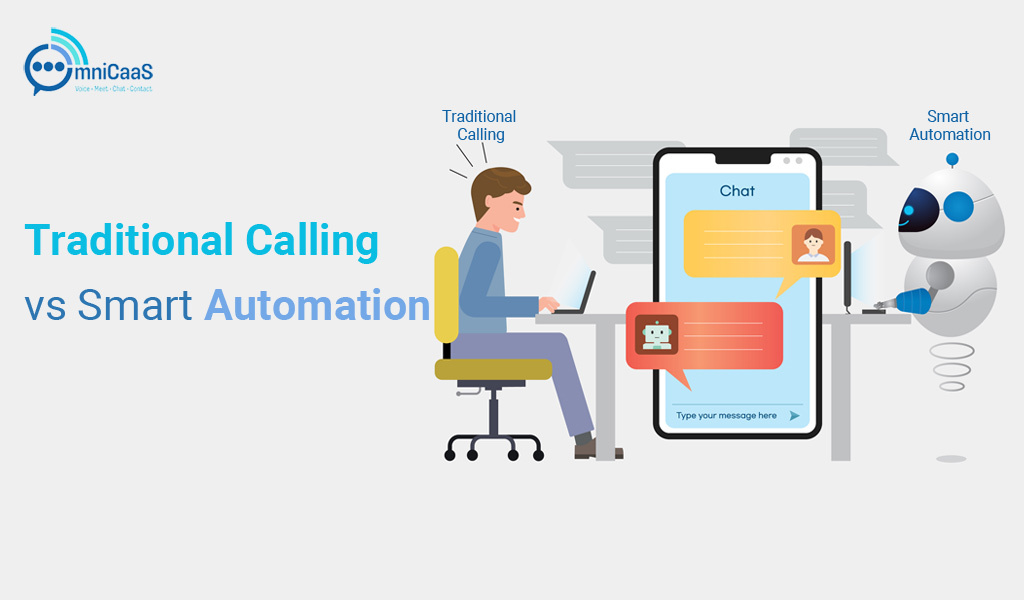
Traditional calling assumes a person on each end. Even with VoIP, the workflow looks like this: phone rings, employee picks up, employee answers the question or transfers the call, employee logs the call (or doesn’t). It’s linear, manual, and capped by how many people you have on shift.
Smart automation flips that. The same phone rings, but an AI agent picks up first. It handles 60 to 80 percent of inbound questions on its own (hours of operation, pricing, scheduling, order status), passes the harder calls to a real person with full context already attached, and writes the call summary into your CRM before the next call comes in.
The effect on a busy front desk is immediate. Calls get answered in under two seconds. No one waits on hold. The team that used to spend 60 percent of the day on phones spends it on patients, clients, or revenue work instead.
Call Routing and Virtual Assistants
A typical VoIP call flow looks like this:
- Caller dials your main number
- Auto-attendant plays a menu
- Caller presses an option (or taps zero in frustration)
- Call rings to a department
- Whoever is free picks up
It works, but it leaks. Calls drop, voicemails pile up, and after-hours callers either hang up or leave a message that nobody returns until Monday.
AI Agents vs Traditional Call Handling looks more like this:
- Caller dials your main number
- AI agent answers within one ring
- Agent identifies the caller (if they’re in your CRM) and asks how it can help
- Conversation happens in plain English or Spanish
- Agent completes the task, sends a confirmation text, and logs the interaction
- If the caller wants a human, the agent warm-transfers with full context
The smart routing piece is what most businesses underestimate. A good AI agent doesn’t just answer calls. It triages them. Sales gets the buying signals, support gets the actual issues, and the receptionist stops being a switchboard and goes back to being the face of the business.
Related Blog : AI Phone Agents for Florida Small Businesses
Cost Comparison
Costs split cleanly into two buckets. VoIP charges per user. AI charges per role replaced.
A 25-person business on a typical VoIP plan looks like this:
- 25 users at $25 per user per month
- Monthly cost: $625
- Annual cost: $7,500
That same business adding an AI agent to handle its main inbound line:
- One AI agent role: $750 per month
- Annual cost: $9,000
- Replaces or offloads work from one or two front-desk staff
- Florida fully-loaded receptionist cost: $42,000 to $55,000 per year per person
Net result: the AI agent typically pays for itself in the first 60 to 90 days, even before you count the after-hours leads it captures. That’s where the up-to 85 percent savings figure comes from. It’s not magic. It’s substituting a $9,000 annual line item for a $50,000 staffing line.
For most Florida businesses we work with, the actual question becomes: do we keep the front desk and have AI handle overflow, or do we let AI take the front line and keep the human for high-value escalations? Either model works. Both pencil out.
Customer Experience Comparison
This is where opinions get loud, and most of them are wrong in both directions.
The argument against AI: “Customers want to talk to a person.” Sometimes true. For complex issues, complaints, or sensitive medical or legal matters, yes, a human is non-negotiable.
The argument against VoIP-only: “Customers expect instant response.” Also true. The average caller hangs up after about 45 seconds on hold. After-hours calls get a voicemail that 70 percent of callers will not leave.
The honest answer is somewhere in between. Customers want fast, accurate, no-friction help. They don’t actually care whether the help comes from a human or an AI as long as the problem gets solved. Hospitality clients running AI agents on reservation lines often see higher CSAT scores than the same line staffed by tired front-desk teams at midnight. Healthcare practices using AI for scheduling cut no-show rates because confirmations actually go out.
Where AI still loses: emotional calls, edge cases, and any situation where the caller wants to be heard, not just answered. That’s why a hybrid model wins. AI takes the routine. Humans take the meaningful.
Integration with Business Tools
Modern cloud phone systems and AI communication tools live or die by integrations. A standalone phone system is just a phone. A connected one becomes a productivity layer.
Look for native integrations with:
- Microsoft Teams (especially for businesses already on Microsoft 365)
- Salesforce, HubSpot, and other major CRMs
- Google Workspace and Microsoft Outlook calendars
- Vertical platforms like ServiceTitan, Jane App, or athenahealth
- Help desks like Zendesk, Freshdesk, and Intercom
- Payment platforms for over-the-phone transactions
- E-signature tools for contract delivery during the call
The VoIP side of the integration story is fairly mature. Most providers cover the basics. The AI side is where the gap shows. Cheap AI agents bolt on top of your phone line but can’t actually read or write to your CRM, calendar, knowledge base, or scheduling system. Without those connections, the AI is just a fancier voicemail. With them, it’s a member of your operations team.
Scalability for Growing Companies
Scaling a traditional team means hiring, training, and praying nobody quits. Scaling cloud phone systems means adding seats. Scaling AI communication means flipping a setting.
A few scaling realities most founders learn the hard way:
Hiring lag
Florida hospitality and healthcare businesses know the pain of seasonal demand. Snowbird season hits in November and your call volume doubles overnight. By the time you’ve hired and trained the seasonal team, the surge is half over. AI handles the surge from day one.
Hurricane risk
When a storm knocks out power and physical offices, on-premise PBX hardware goes dark. Cloud phone systems and AI agents stay live because they run from data centers outside the storm path. Florida businesses on hurricane-prone coasts treat this as table stakes, not a nice-to-have.
Geographic expansion
Adding an Orlando office to a Tampa business used to mean new hardware, new lines, new contracts. With cloud phone systems, you assign numbers and ship laptops. With AI agents, you don’t even add staff for the second location.
Talent supply
The labor pool for front-desk and call-center roles in Florida is tight and getting tighter. AI gives you a way to grow without competing for the same shrinking pool of candidates every other local business is chasing.
This is part of why Florida Businesses Are Switching to AI-Powered Phone Systems faster than the national average. The combination of seasonal demand, hurricane exposure, and a tight labor market makes the math obvious.
Security and Compliance Considerations
If you’re in healthcare, legal, financial services, or any regulated industry, the conversation starts with compliance and ends with everything else.
For VoIP, look for:
- HIPAA-compliant infrastructure with signed BAAs for healthcare
- TCPA compliance for outbound dialing and SMS
- Encrypted call recording and storage
- SOC 2 Type II audited providers
- U.S.-based data centers (matters for state-level regulations and certain federal contracts)
- Florida state business compliance for local operations
For AI communication, add:
- PII redaction in call transcripts
- Configurable data retention windows
- Role-based access to AI conversation logs
- Audit trails for any action the AI takes (booking, payment, data updates)
- Human-in-the-loop options for sensitive flows
The reason this matters: a non-compliant AI agent that books a healthcare appointment can create a HIPAA violation in seconds. A compliant one is an asset. Vet the vendor before you turn anything on.
Cloud Phone Systems vs On-Premise
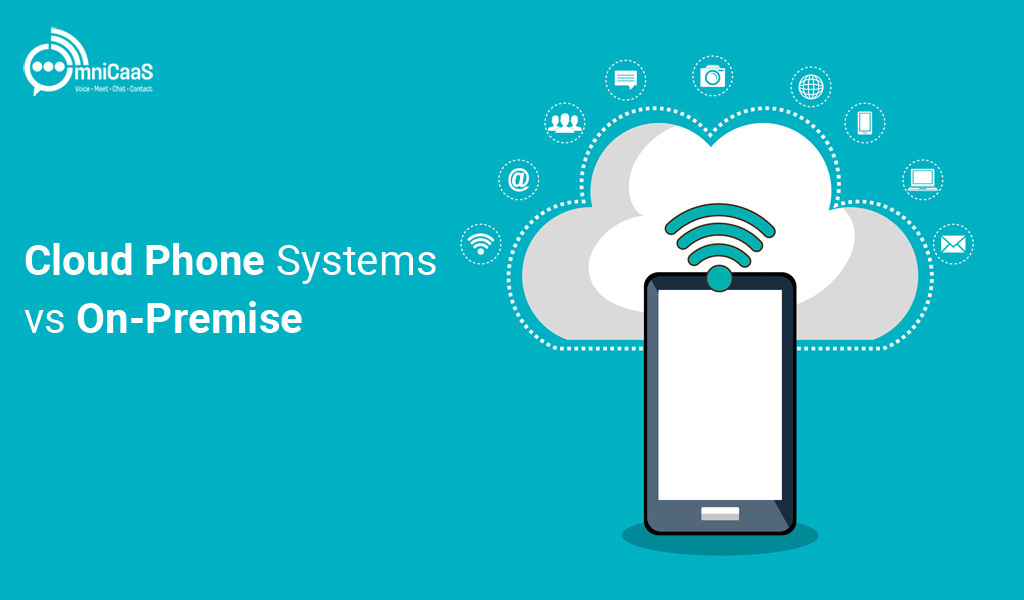
Quick aside that comes up in almost every consultation. If you’re still on an on-premise PBX, the upgrade conversation is bigger than VoIP vs AI communication. It’s also Cloud Phone Systems vs On-Premise.
On-premise means physical hardware in a closet, expensive maintenance contracts, lines that go dead in a power outage, and engineers you have to call every time you want to add a phone. Cloud phone systems eliminate all of that. The ongoing savings alone (lower monthly cost, no maintenance, no hardware refresh every five years) usually justify the switch inside the first year.
If you’re already on cloud, you’re past this debate. Skip ahead.
When to Choose VoIP
VoIP is the right answer when:
- Your team needs reliable internal communication (calls, video, messaging)
- Most of your call volume is internal or outbound
- You don’t have heavy after-hours demand
- Your inbound calls are complex enough that a human is needed every time
- You’re modernizing from on-premise hardware and need the basics working first
- Budget rules out anything beyond per-seat pricing this quarter
A solid business VoIP system covers about 80 percent of what most small and mid-sized businesses need from their phones. Get this layer right before adding anything on top.
When to Choose AI Communication
AI communication tools are the right answer when:
- You’re losing leads after hours
- Your team spends more than 30 percent of the day on repetitive phone tasks
- Front-desk staffing costs are eating margins
- Customers complain about hold times or unreturned calls
- You serve a bilingual market (huge in South Florida) and can’t always staff bilingual people
- Appointment booking, intake, or basic Q&A makes up most of your inbound volume
- You’re scaling faster than you can hire
The fastest ROI usually comes from inbound-heavy businesses that operate beyond standard hours. Healthcare, hospitality, real estate, professional services, and home services all fit the profile.
Can Businesses Use Both Together?
Yes, and most successful deployments do exactly that. The hybrid model is the winning play in 2026.
Here’s how a typical Florida business stacks the two:
VoIP is the backbone. Every employee gets a cloud phone, video, messaging, and a single number that follows them across devices. The internal collaboration layer runs on Microsoft Teams, with VoIP handling external calls.
AI sits on the inbound line. The main business number gets answered by an AI agent first. It handles routine calls, qualifies leads, books appointments, and only escalates to a human when the situation needs one. After hours, weekends, holidays, and during hurricane evacuations, the AI keeps the business open.
The result is one platform doing two different jobs. Internal teams talk to each other on VoIP. Customers and prospects talk to AI first, humans second. Costs go down. Lead capture goes up. Staff stop dreading the phone.
This is the model OmniCaaS built specifically for Florida businesses, and it’s why the dual offering (UCaaS plus AI agents) is showing up in industries that used to be VoIP-only as recently as 2023.
The Future of Business Communications
The next two years are going to widen the gap between businesses that adopt AI-powered phone systems and the ones that don’t. Voice AI is getting cheaper, faster, and more accurate every quarter. Customers are getting more comfortable talking to it. The labor market for front-desk and call-center roles isn’t loosening up.
The businesses winning right now are the ones treating their phone system as a revenue tool, not a utility. Every missed call is a missed deal. Every hour a human spends on a routine call is an hour not spent on the work that actually grows the business. AI fixes both.
VoIP isn’t going away. It’s the foundation. AI is what gets built on top.
Post a Comment