
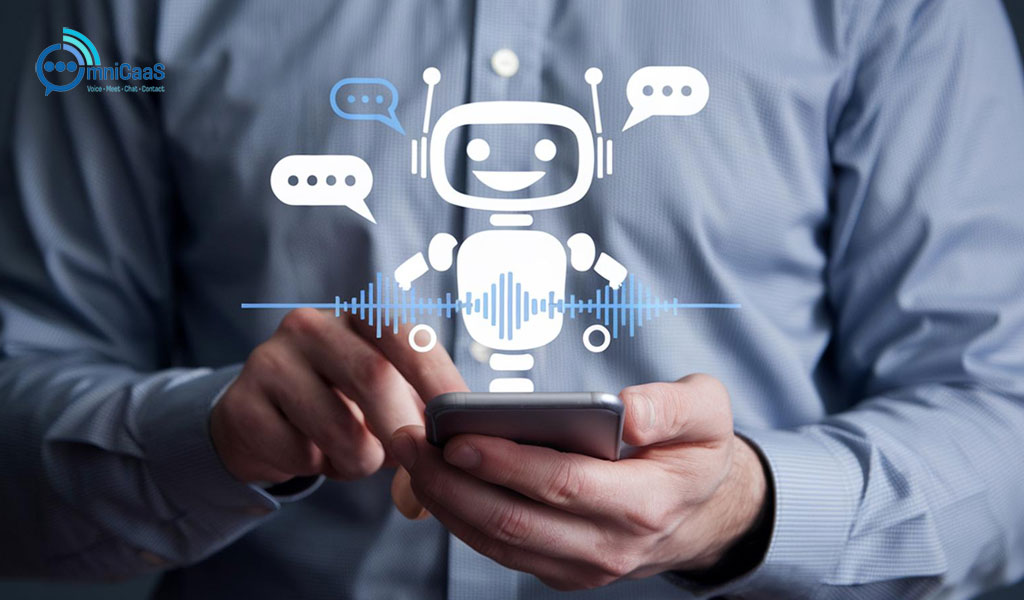
AI agents are no longer experimental add-ons. They are core pillars of modern customer experience. From small e-commerce shops to enterprise contact centers, organizations are folding AI agents into their UCaaS stacks and cloud phone systems to handle routine work, surface insights, and free human teams to focus on high-value interactions. But this shift isn’t just about faster replies. It’s a redesign of business communication: AI agents extend a company’s voice across chat, voice, SMS, and email while executing tasks inside CRMs, ticketing systems, and hosted PBX workflows.
In short, AI-powered customer support is faster and more personal. They are doing it while integrating with the Best UCaaS Provider platforms and reshaping ideas about UCaaS vs. VoIP and the future of VOIP.
What are AI agents for customer service?
An “AI agent” in customer service is an autonomous software entity designed to carry out conversational and operational tasks that previously required a human. Unlike rule-based chatbots that return canned responses, AI chatbots for businesses combine natural language understanding, contextual memory, and API-level access to business systems.
That means they can:
- Carry on multi-turn conversations that keep context
- Read and write to your CRM, order management, and ticketing tools to take real actions
- Switch channels seamlessly
- Trigger workflows in a hosted PBX system or cloud phone system
Think of AI agents as digital frontline employees that combine conversational intelligence with the authority to act inside your systems, and to learn from every interaction.
How AI agents work in customer service
It’s easier to understand what AI agents can and can’t do when you know how they work. Most production AI agents are powered by four technical pillars: collecting data, processing natural language (NLP), doing tasks on their own, and learning and adapting.
1) Data collection
Data is the raw material for any AI agent. Effective agents ingest structured and unstructured information from CRM profiles (customer history, products owned, lifetime value) to Communication logs (chat transcripts, email threads, call recordings).
Good data practices matter: agents perform poorly on messy or siloed data. That’s why integrating sources via your UCaaS provider is essential. Data collection also requires attention to consent and privacy: always ensure PII handling complies with your legal obligations.
2) Natural language processing (NLP)
NLP is what lets an AI agent understand customers. Modern systems use layered NLP for intent detection, entity extraction, and to determine whether a customer feels understood. High-quality systems use combinations of pretrained language models and domain-specific fine-tuning.
3) Autonomous task execution
This is where AI agents move from talk to action. Through secure APIs and workflow connectors, agents can create, prioritize, and update support tickets. They can also pull order status and provide tracking updates.
To do a task, there need to be explicit guardrails, such as role-based permissions, audit records for compliance, and safety nets for risky behaviors that involve people.
Use cases for AI agents in customer service
AI agents shine across many practical scenarios. Below are concrete use cases that demonstrate how they change day-to-day operations.
1) Customer inquiry handling
AI agents respond instantly to high-volume questions such as order status, return policies, pricing, store hours, and basic troubleshooting.
2) Ticket management and escalation
When an AI agent can’t fully resolve an issue, it creates a ticket with enriched context: transcripts, sentiment score, customer lifetime value, and suggested priority. That means human agents see everything they need on the first handoff.
3) Self-service solutions
Self-service reduces live agent load while improving NPS when the knowledge base is well organized, and the AI can surface the correct article or tutorial.
4) Personalized customer support
Imagine an agent who notices repeated shipping problems for a high-value customer and offers expedited shipping or a discount before the customer asks.
5) Sentiment detection and feedback analysis
AI can identify if someone is furious or joyful by how they speak, how fast they talk, and what words they use. Aggregated sentiment analytics highlight trends in product quality, onboarding problems, or seasonal complaints.
Why AI agents are the future of customer service
There are three enduring reasons AI agents will define the next era of automation in customer service:
- Customer expectations: People now expect instant, personalized responses across channels. AI delivers that scale.
- Economic pressure: Businesses need to do more with less. AI agents enable higher throughput without linear headcount growth.
- Platform maturity: UCaaS, hosted PBX systems, and cloud phone system providers are building richer APIs and native AI integrations, enabling tighter orchestration between voice, chat, and backend systems.
AI agents don’t replace human talent when they are used as part of a whole AI-driven communication solution; instead, they make it better. AI takes care of everything else, while human agents focus on empathy, solving hard problems, and finding ways to generate revenue.
Future Trends in AI-Powered Customer Service
- Conversational voice agents that truly sound human: Less lag, better syntax, and the ability to remember context during protracted, multi-step calls.
- Predictive, proactive support: Agents look for problems (such delivery delays) and contact customers before they complain.
- Cross-system orchestration: AI will coordinate actions across billing, logistics, marketing, and fulfillment systems to close issues end-to-end.
- Personalized omnichannel journeys: Customers will pick up the thread on any channel and the agent will retain context and intent.
- Emotion-aware routing: Calls with high frustration are routed to specially trained human agents or supervisors.
- Autonomous workflows with human oversight: Agents can automatically handle a refund, reorder, and incident postmortem when the rules for authorization are met.
- Smarter agent assist tools: Suggestions for human agents in real time, such as what language to use and what to do next depending on the customer’s history.
These trends will make the differences between UCaaS vs. VoIP even lesser. VoIP will become a data point in a larger AI-enabled communication network, which is part of The Future of VOIP that is smarter, more proactive, and more connected.
Conclusively, AI-powered customer support and AI agents in business communication have made interactions faster, more personalized, and more operational.
Companies that want to move forward should make AI agents a part of a unified communication plan that uses UCaaS and cloud phone systems to deliver customers smooth, measurable experiences.
OmniCaaS makes it easy for businesses to integrate AI agents to their communication stack, whether they’re upgrading from an old VoIP system or building a new cloud-native support system.
Read More : What Is an AI Agent? A Simple Guide for Businesses
Post a Comment