

Business communication has altered dramatically in a decade. Long wait times, frequent transfers, and scripted interactions that don’t solve problems are unacceptable. Companies must minimize expenses and offer faster, more personalized service.
This shift has sparked a growing debate: AI agents vs traditional call handling – what actually works better?
This decision affects customer experience, scalability, and revenue for companies using Unified Communication Systems and modern Cloud Phone Systems.
What Are Traditional Call Handling Systems?
Traditional call handling methods underpin outdated customer support. These systems handle incoming and outgoing calls using predefined rules and human intervention, not intelligence or automation.
Traditional call handling uses live agents and basic telephony infrastructure like on-premise PBX systems or early-generation cloud phones. Calls are routed using static logic, department-based queues, predefined IVR menus, or agent availability without considering caller intent or urgency.
A typical traditional call flow looks like this:
- A customer dials a business number
- An IVR menu presents limited options (“Press 1 for Sales, Press 2 for Support”)
- The caller selects an option and waits in a queue
- A human agent answers and manually gathers context
What Are AI-Powered Call Handling Agents?
Intelligent speech systems like AI-powered call handling systems manage, understand, and respond to consumer calls without scripts or menus. Unlike traditional IVR or rule-based automation, these agents are built on artificial intelligence technologies such as Natural Language Processing (NLP), machine learning, speech recognition, and real-time data integration.
At a fundamental level, an AI call agent functions much closer to a skilled human than a machine.
Core Capabilities of AI Call Agents
1) Conversational Call Handling
To allow callers convey their issues in their own words, AI agents speak naturally. The irritation of repeating menus and prompts is eliminated.
2) Smart Call Automation
Routine tasks like setting up appointments, checking on orders, verifying accounts, and answering frequently asked questions are done automatically, without the help of an agent.
3) Intelligent escalation to human agents
AI agents send calls to the best human agent when a question gets complicated or emotionally charged. They achieve this by giving the human agent all the information they need to help the consumer without having to repeat themselves.
4) Call Routing Based on Intent
AI agents don’t just route calls by department. Instead, they employ intelligent call routing to link clients with the optimal resource based on their intent, urgency, and past data.
No call goes unanswered during busy times, holidays, or after office hours because AI call operators never weary.
AI agents work with VoIP, CRM, and collaboration tools to create seamless customer experiences in a Unified Communication System.
Reactive Call Handling vs Intelligent Call Automation
Traditional call handling is fundamentally reactive. A call comes in, the system follows predefined rules, and an agent responds, often without full customer context.
AI call handling, on the other hand, is intelligent and adaptive.
| Traditional Call Handling | AI Call Automation |
| Responds after the issue arises | Anticipates intent in real time |
| Fixed workflows | Dynamic, learning-based flows |
| Limited personalization | Context-aware conversations |
| Manual escalation | Smart prioritization |
This shift from reaction to intelligence is why AI agents are changing business communication across industries.
Call Routing Capabilities
Customer experience is shaped by call routing. Callers often feel frustrated or efficient depending on how quickly they reach the correct person or get the right answer. The gap between traditional and AI-powered call handling is clear here.
How Traditional Call Routing Works
Traditional call routing follows fixed, rule-based logic. Calls are typically routed based on:
- Department selection (Sales, Support, Billing)
- Agent availability
- Time-of-day rules
- Manual IVR menu choices
While predictable, this strategy lacks flexibility. The system has no idea why the customer called. Callers who choose the wrong IVR option or have a multi-departmental issue are sometimes transferred many times or put back in wait.
AI Agents vs Human Agents
Where AI Agents Excel
Speed, consistency, and scale are incorporated into AI agents. No hesitancy, tiredness, or performance variance occurs as they process information instantaneously.
AI bots consistently outperform humans in high-volume environments:
- Answering calls immediately, regardless of call volume
- Delivering uniform, error-free responses to repetitive queries
- Handling multiple conversations simultaneously
- Maintaining accuracy even during peak hours
Because AI agents rely on structured data and predefined business logic, they eliminate common human errors such as missed details, incorrect routing, or inconsistent messaging. This makes them especially effective for tasks like account verification, appointment scheduling, order status checks, and FAQs.
Personalization and Context Awareness in AI Call Handling
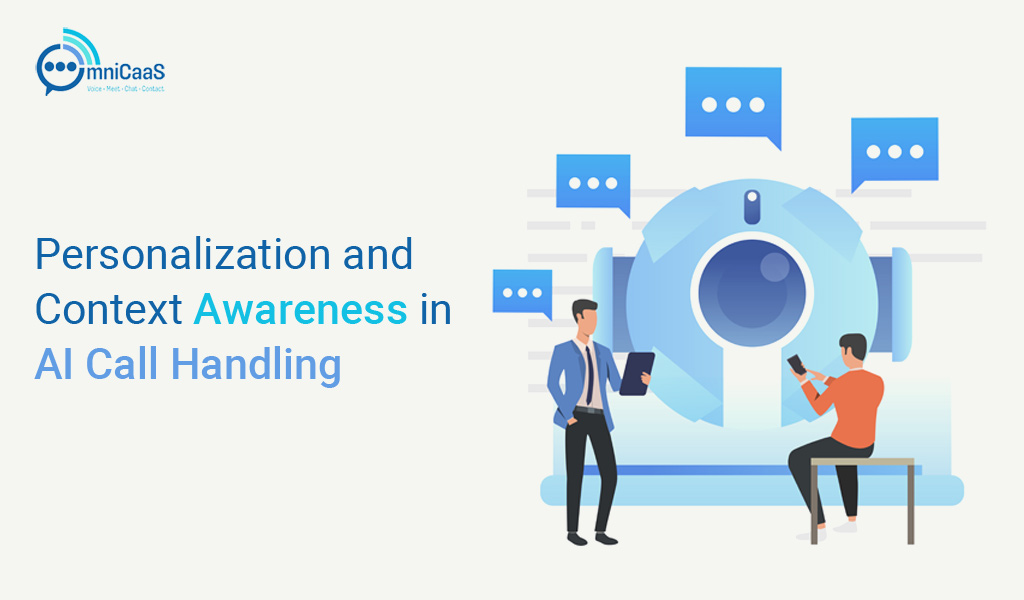
Personalization is no longer optional.
AI agents pull context from:
- CRM platforms
- Past call history
- Purchase behavior
- Omnichannel interactions
Instead of asking repetitive questions, AI agents continue the conversation where it left off, creating a frictionless customer experience across channels.
This level of personalization is nearly impossible to achieve with traditional systems alone.
Scalability Challenges of Traditional Call Handling
Scaling a traditional call center requires:
- Hiring and training new agents
Traditional call handling systems scale primarily by adding more human agents. This process is neither fast nor efficient. Recruiting qualified agents, onboarding them, and providing product or process training can take weeks or even months.
- Rising Operational Costs with Every Call Increase
As call volumes grow, costs increase linearly, or worse. More calls require more agents, more supervisors, more licenses, and often more physical or virtual infrastructure.
Because capacity cannot be adjusted in real time, businesses often experience service degradation precisely when customer engagement matters most.
AI agents scale instantly. Whether handling 10 calls or 10,000, performance remains consistent, making them ideal for fast-growing organizations.
Integration with VoIP, UCaaS, and CRM Platforms
Modern communication isn’t siloed, and neither are AI agents.
AI call agents integrate seamlessly with:
- VoIP systems
- UCaaS platforms
- CRM and helpdesk tools
For OmniCaaS users, this means AI becomes a native extension of unified communications, not a disconnected add-on.
When Traditional Call Handling Still Makes Sense
Traditional call handling remains valuable when:
- Conversations require deep emotional intelligence
- Regulatory constraints limit automation
- Customer relationships depend heavily on human rapport
The goal isn’t replacement, it’s strategic augmentation.
Final Thoughts
The debate between AI agents vs traditional call handling isn’t about technology; it’s about experience, efficiency, and the opportunity to grow.
AI-powered call handling is no longer an option for businesses that use Unified Communication Systems. It gives you an edge over your competitors.
With solutions like OmniCaaS, businesses can easily combine AI automation with human experience to make conversations that are smarter, faster, and more useful.
Post a Comment