Key Takeaways
- Only 52% of home services calls reach a real person, so most shops miss more calls than they think.
- Up to 85% of callers who reach voicemail never call back and go straight to a competitor.
- An average HVAC repair job is worth about $1,205, so one missed night call can cost real money.
- An AI call answering service picks up every call at any hour and sorts true emergencies from routine requests.
- Only urgent calls wake your on call tech, while routine jobs get booked for the next morning.
- Cloud phone systems with time based routing switch to your after hours flow automatically.
- AI agents handle overflow during heat waves and hard freezes, so no caller hears a busy signal.
- Most small HVAC and plumbing shops can set up full after hours coverage in one to two weeks.
It’s 2 AM in January. A homeowner in Ohio wakes up to a silent furnace and a house dropping toward 50 degrees. She grabs her phone, searches “emergency HVAC near me” and calls the first company she sees. It rings five times and goes to voicemail. She hangs up and calls the next one.
That second company just won a job worth several hundred dollars, maybe a new system worth thousands, and a customer who will call them for the next ten years.
So how do HVAC and plumbing companies stop missing after hours emergency calls? The short answer: put a system on your line that answers every call, every hour, and knows which ones need a technician tonight. For most shops in the USA, that means a cloud phone system paired with AI that picks up when nobody else can, books the job and wakes up the right person only when it matters.
The rest of this guide shows what a missed night call really costs, how the setup works and what to put in place before your next cold snap or heat wave.
Why After Hours Calls Matter Most in HVAC and Plumbing
Most businesses can let a night call wait until morning. Yours can’t. A burst pipe floods a kitchen in minutes. A dead AC in a Phoenix July can put an elderly homeowner in real danger. Nobody with water on the floor leaves a voicemail and waits patiently.
Emergencies are also common. A 2025 HomeServe survey of more than 2,500 Americans found that over 8 in 10 had dealt with a home repair emergency in the past year, and heating and cooling problems topped the list.
The trouble is that the person who would answer the phone is usually the person doing the work. Your tech is in a crawl space at 2 PM. Your owner is asleep at 2 AM. Invoca’s 2026 home services benchmark, built on 70 million tracked calls, found that only 52% of inbound home services calls actually reached a person.
Peak season makes it worse. Samsara’s analysis of 65 million HVAC service trips showed that July through October is the busy stretch, and heat waves can push trips per vehicle up several times over in a single week. That’s exactly when your phone rings nonstop and every truck is already out.
The Real Price of Letting the Phone Ring
When a 2 AM call goes to voicemail, you lose more than one service ticket. You lose four things at once:
- The job itself. Emergency work is often your highest margin work, because homeowners pay for speed.
- The marketing money behind the call. If that caller found you through Google Ads, Local Services Ads or a lead site, you already paid for the ring. Voicemail throws that spend away.
- The review. The homeowner you save at 2 AM is the one most likely to leave a glowing five star review. The one you miss may leave a bad one instead.
- The lifetime customer. Whoever fixes the emergency usually gets the maintenance plan, the next repair and the full system replacement years later.
After hours callers are also your most motivated buyers. Nobody calls a plumber at 2 AM to compare prices for fun. They have a problem right now, and they will hire the first company that answers.
Now look at what happens to callers who don’t get an answer. According to CallRail’s 2025 benchmark, as reported by Plumber Magazine, up to 85% of callers who reach no one never call back. They simply move to the next listing.
Run the numbers on your own shop. Invoca found that 38% of answered home services calls are real leads and 45% of those leads book on the call. That works out to roughly 17 jobs for every 100 answered calls. If your average ticket is $1,205, every answered call is worth about $200 on average. Miss ten after hours calls a month and you could be handing competitors $2,000 or more, every single month.
And that’s before counting lifetime value. The family whose furnace you fixed at 2 AM is the family that calls you for the maintenance plan, the water heater and the full system replacement down the road.
How an AI Call Answering Service Handles the 2 AM Call
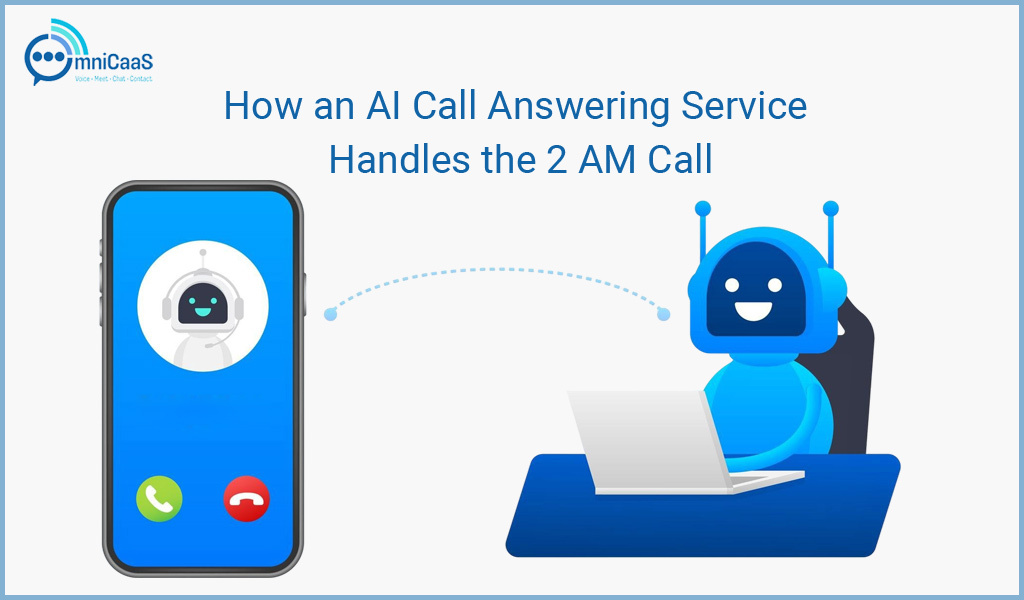
The old options were never great. Voicemail loses most callers. A live answering service charges by the minute and often just takes a message. Putting your techs on a phone rotation burns them out fast.
An AI call answering service changes that. It answers on the first ring, talks like a trained dispatcher and follows the rules you set. Here’s how a typical night call plays out:
- The AI greets the caller by your company name and asks what’s going on.
- It confirms the address falls inside your service area.
- It asks triage questions you define, like “Is water actively leaking?” or “Is there any smell of gas?”
- A true emergency gets transferred straight to your on call technician, with the details already captured.
- A routine issue, like a slow drain or a tune up request, gets booked into the first open morning slot.
- You receive a clean call summary by text or email before the caller even hangs up.
The real value is in that triage step. Your on call tech no longer wakes up for a question about business hours. They only wake up for the calls that pay and the calls that can’t wait.
Good systems also know their limits. You decide which topics go to a human every time, such as price quotes, warranty disputes and complaints. The AI collects the details and promises a callback instead of guessing.
Build the Right Phone Foundation First
AI answering works best on top of a phone system built for a mobile crew. Old copper landlines and basic desk phones weren’t designed for techs who spend all day in trucks, attics and basements.
Modern cloud Business Phone Systems give you a few things that matter a lot after dark:
- Time based call routing. Calls ring the office during the day and switch to your after hours flow automatically at closing time.
- One number everywhere. Your company number rings on a tech’s smartphone app, so customers never see a personal cell number.
- Find me, follow me. If the first on call tech doesn’t pick up in 30 seconds, the call rolls to the next person on the list.
- Call recording and logs. Every night call is saved, so you can settle a dispute or coach a dispatcher later.
- Keep your number. You can usually port the number painted on your trucks and printed on your Google listing.
If your office already runs on Microsoft 365, Microsoft Teams Integration is worth a serious look. Dispatchers can make and take customer calls inside Teams, see who’s available and message a tech in the same window. When the 2 AM emergency gets handed off in the morning, the whole team sees the call notes in one place instead of hunting through texts and voicemails.
Give Your Night Crew Better Tools in the Field
Answering the call is step one. Fixing the problem fast is what earns the five star review.
Picture your newest tech standing in front of an unfamiliar boiler at 3 AM. Instead of calling the senior tech and describing it over a bad connection, they open a live video call. With Web & Video Collaboration, your most experienced person can see the equipment, spot the issue and walk them through the repair from home. One video call can save a second truck roll the next morning.
Video also helps before anyone drives out. Some shops ask homeowners to show the leak or the error code on a quick video call, which helps the tech bring the right part on the first trip.
Paperwork still matters too, especially in the trades. Plenty of supply houses, manufacturers, insurance adjusters and local permit offices still send documents by fax. Fax to Email Communication Software drops those faxes straight into your inbox as PDFs. That parts confirmation or warranty approval reaches your phone in the field, not a dusty machine in an empty office.
Scale Up for Heat Waves and Hard Freezes
Every HVAC and plumbing owner knows the pattern. The weather turns, and suddenly 40 calls land in an hour. The first big freeze in Texas or a week of 100 degree days in the Southeast can double your call volume overnight.
Once you have a dispatcher or two, Contact Center Tools help you manage that rush with some order. Callers wait in a queue instead of hearing a busy signal. Call route to whoever is free. Live dashboards show how many people are waiting and how long. Afterward, reports tell you which hours and days brought the most calls, so you can staff smarter next season.
Even a strong team has a ceiling. That’s where AI Call Center Agents earn their keep. When every human line is busy, the AI picks up the overflow, books appointments, answers common questions and flags the true emergencies for your team. No caller hears voicemail, and nobody gets put on hold for 20 minutes during the busiest week of the year.
The nice part is that you pay for capacity only when you need it. You don’t have to hire and train three extra seasonal dispatchers who sit idle every spring and fall.
How to Set Up After Hours Call Handling in 7 Steps
You don’t need a big IT team to get this running. Most small and midsize shops can go live in a week or two.
- Define what counts as an emergency. Write it down in plain language. No heat below a set temperature, no AC above a set temperature, active leaks, sewage backups, gas smells and no hot water in a home with infants are common examples.
- Set your hours and routing rules. Decide when the after hours flow starts, who is on call each night and who gets the call if they don’t answer.
- Write your AI script. List your service area by city or zip code, the services you offer, your emergency fee and the questions the AI should ask on every call.
- Choose what always goes to a human. Prices, warranty claims, complaints and anything involving gas safety are good candidates.
- Connect your calendar. Let the AI book routine calls straight into open morning slots so your dispatcher starts the day with a full board.
- Test it yourself. Call your own number at night from a different phone. Pretend to be a panicked homeowner with a flooded basement and see what happens.
- Review the first two weeks. Read every call summary, adjust the triage questions and add answers to the questions callers actually asked.
One tip from shops that do this well: tell your customers about it. A line on your website and invoices saying “We answer 24/7, even at 2 AM” turns your phone setup into a selling point.
Answer Tonight’s Call Before Your Competitor Does
The 2 AM caller isn’t shopping on price. They want someone to pick up, understand the problem and show up. The company that answers first usually wins the job, and often the customer for life.
You don’t have to sleep with your phone on your chest to be that company. With the right phone system, smart routing and AI covering the hours your team can’t, every emergency call gets answered and every routine call gets booked.
OmniCaaS helps HVAC and plumbing businesses across the USA set up exactly this kind of after hours coverage. Talk to our team and find out how many calls your shop is missing right now, and how many of them you could turn into jobs starting this week.

Post a Comment