

There’s a quiet divide happening in business right now. On one side, companies are still sending templated emails, managing five disconnected tools, and leaving customers on hold for 20 minutes. On the other side, companies are having faster, smarter, more personal conversations at every touchpoint — and it shows in their numbers.
The difference isn’t budget. It isn’t team size. It’s that the second group took AI-powered communication seriously before it became unavoidable.
If you’re reading this trying to figure out what’s actually worth paying attention to — not the hype, just the real shifts — this is for you.
AI in Business Communication Isn’t One Thing
Before getting into trends, it’s worth being clear about what “AI-powered business communication” actually covers, because it’s become one of those phrases people throw around without much precision.
It includes chatbots and virtual agents. It includes voice AI on phone lines. It includes tools that translate conversations in real time, systems that predict when a customer is about to churn, and writing assistants that help a support rep craft a clearer reply. It’s a wide category — and that’s important because the companies getting the most out of it aren’t treating it as a single tool. They’re weaving it across the full communication stack.
Trend 1: Customers Are Done Waiting
This one isn’t new, but what’s changed is how little patience actually remains.
A few years back, a next-day email response was fine. Today, a customer who doesn’t get an answer within minutes — especially for something urgent — will often just go somewhere else. That’s not dramatic. That’s what the data consistently shows.
AI communication tools have made 24/7 responsiveness achievable for businesses that couldn’t afford a round-the-clock team. Not just a generic auto-reply, either — actual contextual responses that pull from order history, account status, and previous conversations.
The companies getting this right are the ones using AI-powered platforms like OmniCaaS that combine automation with intelligence, not just speed with noise.
Trend 2: Omnichannel Communication Is Table Stakes Now
Here’s a scenario every customer has lived through: they emailed last week, called this morning, and now they’re on chat — and nobody on the business side seems to know any of that happened.
It’s exhausting. And it erodes trust faster than almost anything else.
Omnichannel AI communication connects every channel — email, live chat, SMS, phone, social — so the conversation stays continuous regardless of where it picks up. A support agent doesn’t need to ask “can you tell me what happened?” because they already know. The customer doesn’t have to repeat themselves.
This is table stakes now for businesses that want customers to stick around. It’s also one of the areas where omnichannel communication solutions like OmniCaaS create the most immediate, visible impact.
Trend 3: Voice AI Is Finally Worth Taking Seriously
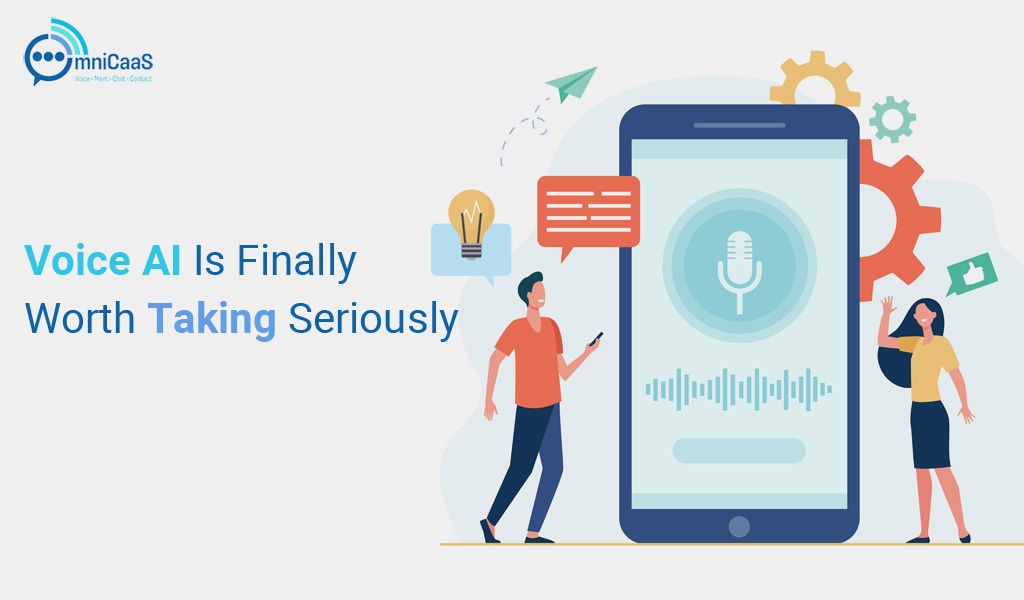
Phone IVR systems have been a punchline for years. Press 1 for sales, press 2 for billing, press 0 to restart from the beginning. It became a symbol of companies that didn’t care enough to do better.
Voice AI in 2026 is a genuinely different technology. Customers speak naturally, the system understands intent rather than keywords, and calls get routed or resolved with context intact. Some platforms even pick up on urgency or frustration in tone — and adjust the experience accordingly.
This matters for businesses that still handle a significant volume of phone interactions. Updating from a legacy IVR to an AI voice communication system is one of the clearest, fastest ways to improve customer experience scores without restructuring an entire team.
Trend 4: Real-Time Translation Is Removing Language Barriers
This one sneaks up on companies. They build a great support setup, great response times, great AI tools — and then realize that 30% of their customer base prefers a language they haven’t accounted for.
AI-powered translation now works inside live conversations — chat, email, and even voice — with accuracy good enough for real business exchanges. Not tourist-phrase accuracy. Actual nuance and industry terminology handled correctly.
For companies with global customers, or even just a linguistically diverse domestic market, this capability is no longer a nice-to-have. It’s the difference between serving those customers well and losing them to a competitor who does.
Trend 5: Proactive Communication Is Replacing Reactive Support
Most businesses respond when something goes wrong. A customer complains, a ticket opens, someone fixes it. That model is expensive and slow, and it mostly catches problems only after the customer is already frustrated.
Predictive AI communication works earlier in the cycle. It looks at behavioral signals — login frequency, engagement patterns, billing history, past support interactions — and identifies which customers are heading toward a problem before they’ve reached out about it.
From there, an automated but personalized outreach kicks in. A check-in message. A proactive resolution. An offer that makes sense given where they are. This approach consistently reduces churn and improves retention, because it communicates that the company is paying attention.
OmniCaaS is built around this kind of proactive model — helping businesses move from reactive fire-fighting to something that actually looks like customer care.
Trend 6: AI Writing Tools Are Closing the Quality Gap
Every business has team members who are stronger communicators than others. That’s just reality. But when every message that leaves the company represents the brand, inconsistency is a real problem.
AI writing assistance built into communication platforms helps close that gap. It suggests clearer phrasing, flags tone issues, helps with structure. A newer hire can send a support reply that reads as confidently as a five-year veteran. A rushed sales rep can still send something coherent at the end of a long day.
Over months, this adds up to a more consistent brand voice across thousands of customer interactions — which builds trust in ways that are hard to measure but easy to feel.
The Honest Takeaway
None of this works if you try to do all of it at once. The companies that get stuck usually over-architect the rollout — six tools, three integrations, a two-month pilot — and then lose momentum when something doesn’t go perfectly.
The smarter play: find the one place where communication is costing you the most. Response time, channel fragmentation, language gaps, call experience — pick the worst one and fix it. Build the habit of using AI communication tools well, then expand from there.
The technology is ready. The platforms are accessible. The only question now is timing — and every quarter you wait is a quarter your competitors are using these tools instead.
About OmniCaaS: OmniCaaS helps businesses build AI-powered communication systems that work across every channel — from live chat and voice to email and SMS. Learn more at omnicaas.com .
Related Blog : Why Businesses Are Adopting AI Voice Agents for 24/7 Communication
Post a Comment