
Making calls is only one aspect of communication; another is establishing smooth, instantaneous connections across various channels between teams, clients, and partners.
Businesses are quickly transitioning from traditional phone lines to sophisticated, cloud-powered communication ecosystems, which include voice, video, message, and collaboration technologies.
Because of this, picking the best supplier for your company phone system is more important than ever. In addition to facilitating communication, the ideal solution boosts output, fortifies client ties, and promotes scalable expansion.
However, with so many suppliers of business phone systems offering anything from hosted phone systems to VoIP business solutions, how can you choose which one is ideal for your company?
The Evolution of Business Communication Systems
Once upon a time, business communication was defined by the clunky Private Branch Exchange (PBX) systems of the 1980s and 1990s. These were hardwired, hardware-heavy setups that required significant investment and maintenance. Calls were tethered to office desks, scalability was limited, and integration was virtually nonexistent.
Then came PRI (Primary Rate Interface) systems, which added more digital flexibility but still demanded physical infrastructure and telecom dependencies. Businesses had to rely on in-house IT support and third-party technicians to handle even minor configuration changes.
The next revolution came with VoIP (Voice over Internet Protocol). This is a technology that allows voice calls to travel over the internet instead of traditional phone lines. This transition democratized communication, offering flexibility, cost efficiency, and mobility that PRI systems simply couldn’t match.
Today, the evolution continues with Unified Communication as a Service (UCaaS), an integrated model that merges voice, video, chat, and collaboration tools into one cloud platform. This has given rise to a new generation of business VoIP service providers and unified communication providers that deliver enterprise-grade communication without the complexity or capital expense of legacy systems.
Key Features to Look for in a Business Phone System Provider
The right provider should do more than handle calls. It should empower your workforce with features that streamline operations and enhance collaboration. Here are the essential features to look for when evaluating business phone system providers:
1) High-Definition Voice and Video Quality
Crystal-clear communication is non-negotiable. Look for providers offering HD voice and low-latency video to ensure professional-grade interactions with clients and colleagues alike.
2) Unified Communication Capabilities
Modern workforces rely on multiple channels such as chat, video conferencing, and file sharing. The best systems integrate these tools seamlessly, offering an all-in-one unified communication platform that eliminates the need for switching between apps.
3) Mobile and Remote Access
With hybrid work becoming the norm, ensure the provider supports mobile apps and softphone clients so employees can make and receive business calls from anywhere, on any device.
4) Advanced Call Management
Features like call forwarding, auto-attendant, IVR (Interactive Voice Response), call routing, and voicemail-to-email improve efficiency and customer experience.
5) Integration with CRM and Productivity Tools
Look for compatibility with platforms like Microsoft Teams, Salesforce, or Google Workspace. A tightly integrated system ensures call data syncs with business workflows for improved productivity.
6) Analytics and Reporting
Data-driven insights help you track call volumes, customer interactions, and team performance. This is vital for optimizing operations and ensuring accountability.
7) Reliability and Security
Redundancy, encryption, and guaranteed uptime are crucial. Your business communication shouldn’t suffer from outages or vulnerabilities.
When a business communication system combines these elements, it transitions from a tool to a strategic advantage.
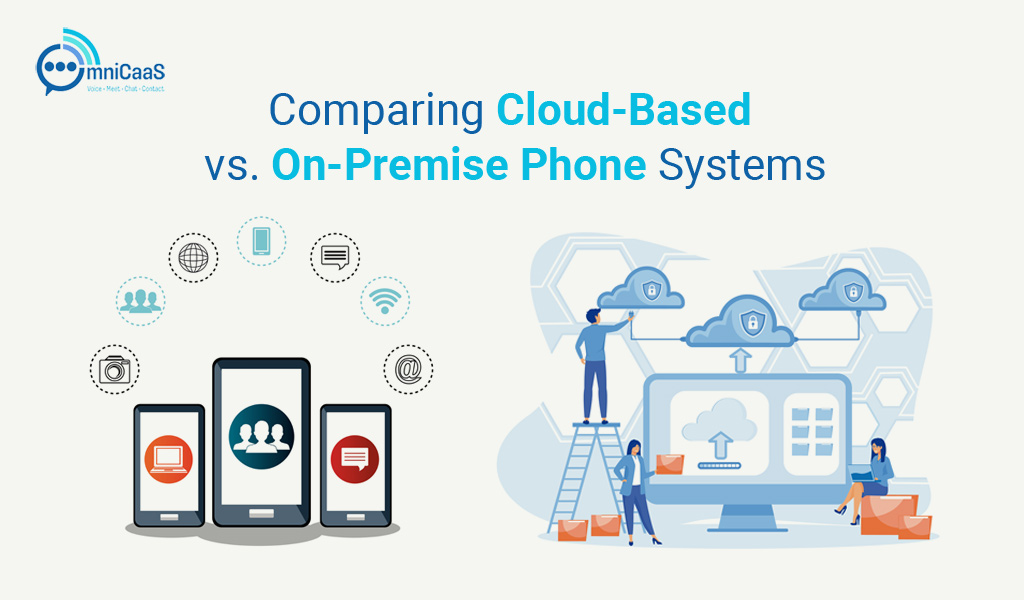
Comparing Cloud-Based vs. On-Premise Phone Systems
The decision between cloud-based and on-premise phone systems often determines your communication strategy’s long-term flexibility and cost efficiency.
1) Cloud-Based Phone Systems
Also known as hosted phone systems or VoIP business solutions, cloud-based systems store all infrastructure off-site. Calls are managed via the internet and maintained by your provider.
Benefits:
- Lower upfront cost: No physical PBX hardware or maintenance costs.
- Remote flexibility: Perfect for hybrid and distributed teams.
- Scalability: Easily add or remove lines as your business grows.
- Automatic updates: Your provider handles software updates, patches, and new features.
- Built-in redundancy: Leading providers ensure 99.999% uptime across multiple data centers.
2) On-Premise Phone Systems
On-premise systems rely on locally hosted hardware — typically a PBX setup managed by your IT team.
Benefits:
- Direct control: Full oversight of your infrastructure and security.
- Custom configuration: Ideal for businesses with highly specific compliance or network requirements.
While PRI systems still exist in some enterprises, VoIP has overtaken them due to lower costs, improved quality, and integration potential. PRI vs. VoIP essentially comes down to flexibility versus rigidity, with VoIP emerging as the clear leader for dynamic business environments.
Reliability, Uptime, and Customer Support Considerations
Even the most advanced phone system is useless if it’s unreliable. When evaluating business phone system providers, always assess their uptime guarantees, data redundancy, and support channels.
Key Evaluation Points:
- Uptime Guarantee: Look for 99.99% or higher uptime, ideally backed by a Service Level Agreement (SLA).
- Redundancy: Top VoIP business solutions use multiple geo-redundant data centers for continuity during outages.
- 24/7 Support: Choose providers offering round-the-clock support via chat, phone, or email.
- Proactive Monitoring: Providers that detect and resolve issues before they impact users stand out.
- User Training and Onboarding: Smooth transitions are critical; ensure they offer setup assistance and documentation.
A reliable provider should not only prevent downtime but also ensure your business communications stay resilient during unexpected events, from power failures to network disruptions.
Scalability and Flexibility for Growing Businesses
A good business communication system should evolve with your organization. Whether you’re onboarding new employees, expanding to new regions, or launching remote teams, your phone system must scale effortlessly.
What to Look For:
- Easy user management: Add or remove lines in minutes without technical intervention.
- Flexible pricing: Pay only for what you use; avoid overprovisioning.
- Multi-location support: Unified management for distributed offices.
- Future-ready infrastructure: Ability to integrate new tools as your needs evolve.
Cloud-based systems shine here, offering the elasticity that traditional PBX or PRI systems can’t match. For fast-growing businesses, scalability equals agility. This is a crucial edge in today’s competitive landscape.
Security and Compliance Features to Prioritize
- End-to-End Encryption (E2EE): Protects voice and data packets from interception.
- Secure SIP Trunking: Adds a protective layer between your VoIP system and the public internet.
- Multi-Factor Authentication (MFA): Prevents unauthorized access to admin panels and user accounts.
- Data Residency and Compliance: Providers should comply with standards like GDPR, HIPAA, and SOC 2.
- Fraud Detection and Monitoring: Alerts for suspicious call activity or potential breaches.
The best cloud phone systems often include built-in compliance support and continuous monitoring, giving peace of mind without adding complexity to your internal IT.
Evaluating Value Over Price
When assessing providers, focus on:
- Feature-to-cost ratio: Are you paying for innovation or outdated tech?
- Support quality: Reliable service reduces downtime costs.
- Scalability: Can you expand without replacing hardware?
- Uptime and redundancy: Avoid costly interruptions.
Remember: A slightly higher subscription may yield better uptime, integrated collaboration tools, and long-term ROI. Think value, not just price.
Choosing between leading business phone system providers isn’t about picking the cheapest option; it’s about finding the one that aligns with your company’s goals, workflow, and growth plans.
The most effective systems combine reliability, security, integration, and scalability, empowering teams to communicate smarter and serve customers better.
Post a Comment